



HIV Protease
HIV protease, a homodimeric aspartyl protease, is crucial for the viral life-cycle, cleaving proviral polyproteins, hence creating mature protein components that are required for the formation of an infectious virus. HIV protease cleaves newly synthesized polyproteins at the appropriate places to create the mature protein components of an infectious HIV virion. HIV protease is a critical drug target in designing anti-retroviral drugs to treat HIV/AIDS (acquired immune deficiency syndrome).
HIV-1 protease permits viral maturation by processing the Gag and Gag-Pro-Pol polyproteins. It recognizes and cleaves more than 12 different substrates leading to viral maturation. Similar to that of HIV-1, HIV-2 protease is also a homodimeric aspartyl enzyme that plays a vital role in the HIV life-cycle through processing of Gag and Gag-Pro-Pol precursor polyproteins leading to viral maturation.
All Product Categories
-
HIV Protease Related Products (203)
Related Products (203)

-
2α,19α-Dihydroxy-3-oxo-urs-12-en-28-oic acid
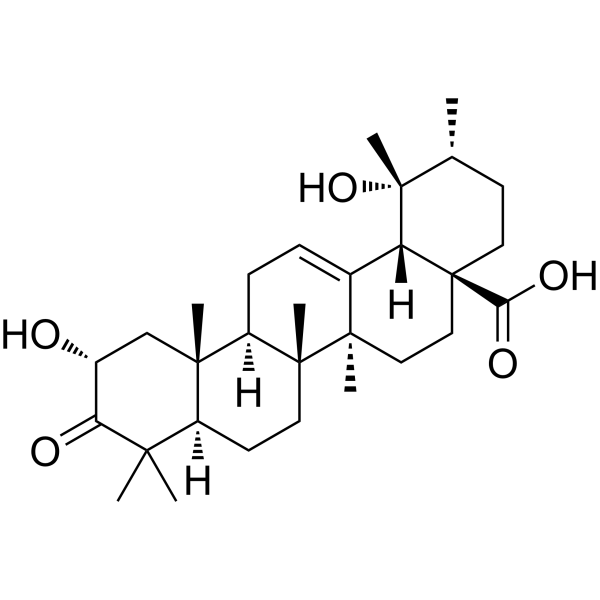 0 Images2α,19α-Dihydroxy-3-oxo-urs-12-en-28-oic acid, a natural ursane-type triterpene, is a potent inhibitor of HIV protease (HIV Protease). 2α,19α-Dihydroxy-3-oxo-urs-12-en-28-oic acid is also an inhibitor of the activation of Epstein-Barr virus early antigen (EBV-EA). 2α,19α-Dihydroxy-3-oxo-urs-12-en-28-oic acid displays an inhibitory activity against nitric oxide production in Lipopolysaccharide (Lipopolysaccharides)-activated RAW 264.7 cells.
-
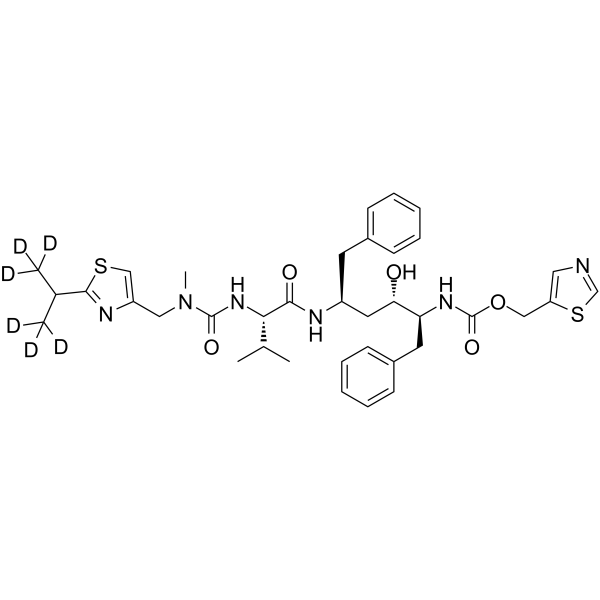
Nelfinavir (Standard)
 0 ImagesCat. No.: HY-15287RCAS No.: 159989-64-7Synonyms: AG1341 (Standard)Nelfinavir (Standard) is the analytical standard of Nelfinavir. This product is intended for research and analytical applications. Nelfinavir (AG-1341) is a potent and orally bioavailable HIV-1 protease inhibitor (Ki=2 nM) for HIV infection. Nelfinavir is a broad-spectrum, anticancer agent.
-
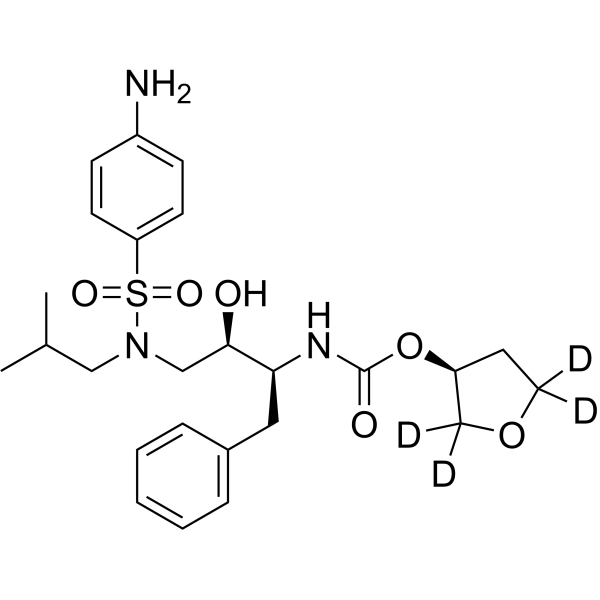
Atazanavir-d5
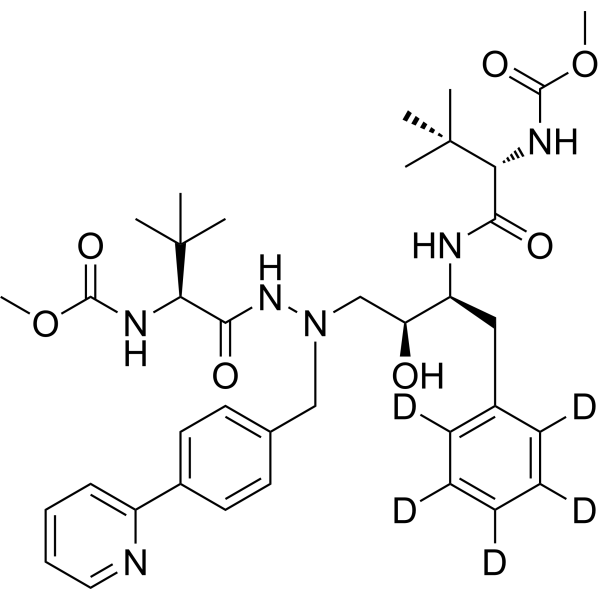 0 ImagesCat. No.: HY-17367S3CAS No.: 1132747-14-8Atazanavir-d5 is the deuterium labeled Atazanavir. Atazanavir (BMS-232632), a highly selective HIV-1 protease inhibitor, is the first protease inhibitor approved for once-daily administration. Atazanavir (BMS-232632) is a substrate and inhibitor of CYP3A4, and an inhibitor and inducer of P-glycoprotein (P-gp). Atazanavir is also a SARS-CoV 3CLpro inhibitor with an IC50 of 3.49 μM.
-
Atazanavir-d9
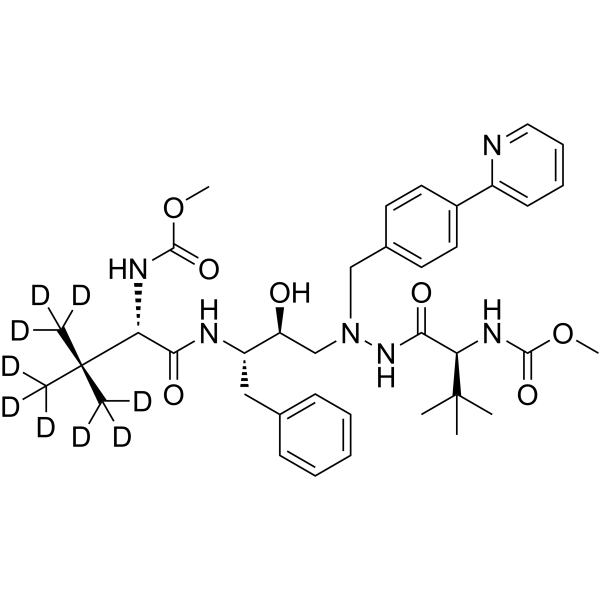 0 ImagesCat. No.: HY-17367S2CAS No.: 1092540-51-6Synonyms: BMS-232632-d9Atazanavir-d9 is the deuterium labeled Atazanavir. Atazanavir (BMS-232632), a highly selective HIV-1 protease inhibitor, is the first protease inhibitor approved for once-daily administration. Atazanavir (BMS-232632) is a substrate and inhibitor of CYP3A4, and an inhibitor and inducer of P-glycoprotein (P-gp). Atazanavir is also a SARS-CoV 3CLpro inhibitor with an IC50 of 3.49 μM.
-
Indinavir-d6
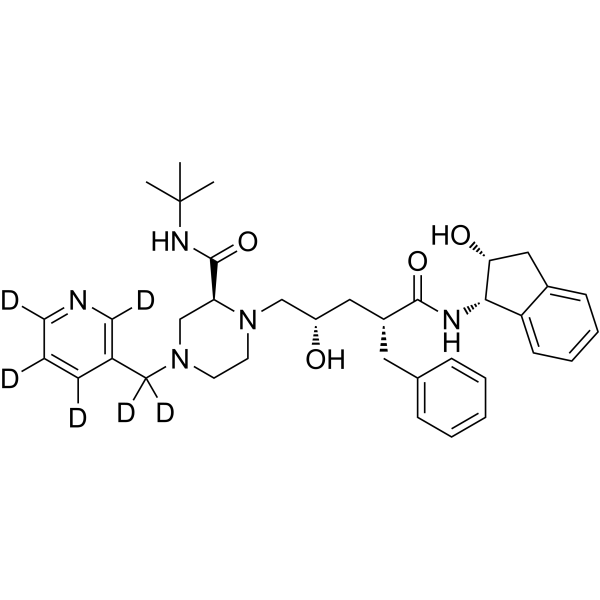 0 ImagesCat. No.: HY-B0689SCAS No.: 185897-02-3Synonyms: MK-639-d6 free base; L-735524-d6 free baseIndinavir-d6 is the deuterium labeled Indinavir. Indinavir (MK-639; L735524) is a potent and specific HIV protease inhibitor that appears to have good oral bioavailability.
-
DPC 684
 0 ImagesCat. No.: HY-171835CAS No.: 284661-73-0DPC 684 is a potent and selective HIV-1 protease inhibitor (IC90 = 5.7-40 nM, Ki = 0.021 nM). DPC 684 competitively inhibits HIV-1 protease and blocks viral polyprotein cleavage. DPC 684 has low protein binding and broad-spectrum inhibition against a variety of wild-type and mutant HIV-1 proteases. DPC 684 has low protein binding and broad-spectrum inhibition (IC90 = 1.9-6.3 nM). DPC 684 has research significance for HIV.
-
PNU-103017
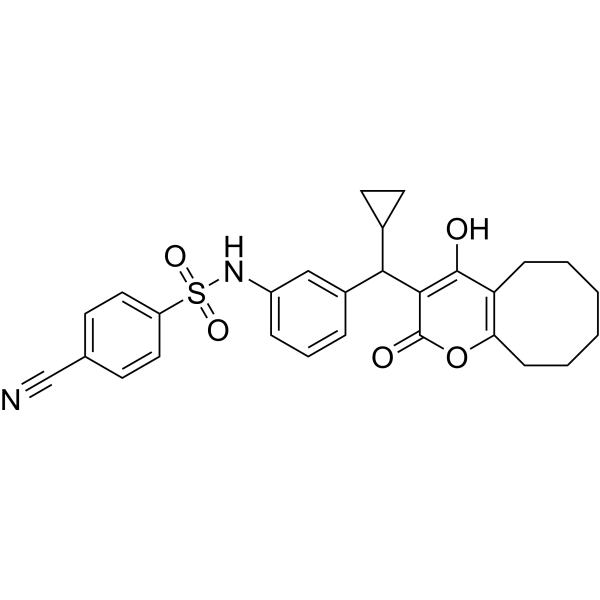 0 ImagesCat. No.: HY-19236CAS No.: 166335-18-8PNU-103017 is an HIV protease inhibitor.
-
Tipranavir-d7
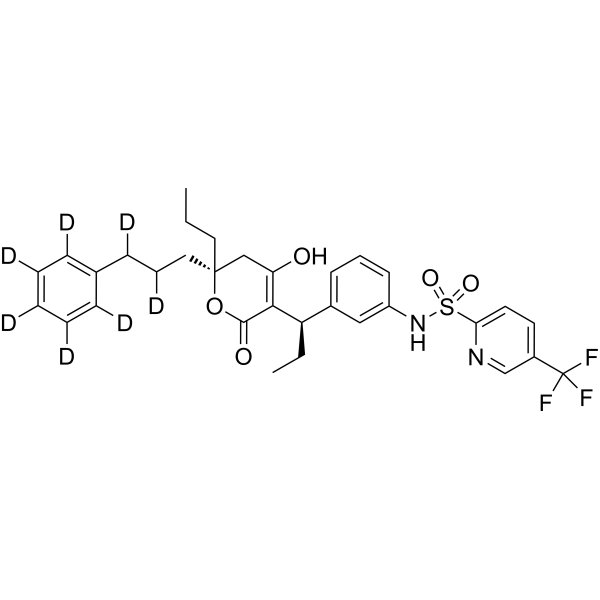 0 ImagesCat. No.: HY-15148S1Purity: 98.94%Synonyms: PNU-140690-d7Tipranavir-d7 is deuterated labeled Tipranavir (HY-15148). Tipranavir (PNU-140690) inhibits the enzymatic activity and dimerization of HIV-1 protease, exerts potent activity against multi-protease inhibitor (PI)-resistant HIV-1 isolates with IC50s of 66-410 nM. Tipranavir inhibits SARS-CoV-2 3CLpro activity.
-
SKF107457
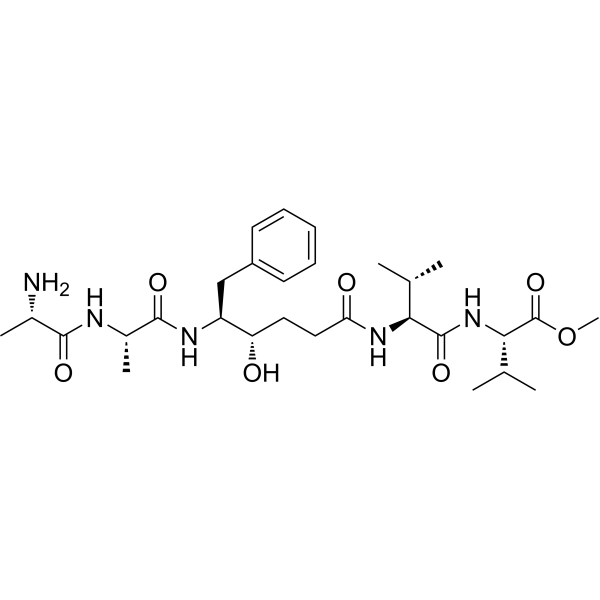 0 ImagesCat. No.: HY-120880CAS No.: 126333-28-6

-
Droxinavir hydrochloride
 0 ImagesCat. No.: HY-125494CAS No.: 155662-50-3Synonyms: SC-55389ADroxinavir hydrochloride (SC-55389A) is an HIV-1 protease inhibitor. Droxinavir hydrochloride binds to the S2 and S2' subsites of HIV-1 protease, and this interaction is regulated by protease amino acid residue 88, where the N88S mutation confers viral resistance. Droxinavir hydrochloride can be used in studies related to human immunodeficiency virus type 1 infection.
-
MK-8718
 0 ImagesCat. No.: HY-104052CAS No.: 1582729-24-5
-
HIV Protease Substrate IV
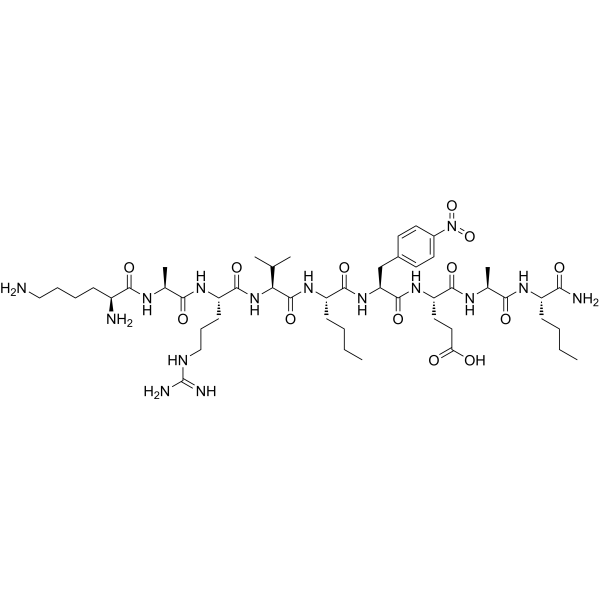 0 ImagesCat. No.: HY-P4018CAS No.: 128340-47-6HIV Protease Substrate IV is a substrate of HIV protease. HIV Protease Substrate IV can be used to measure the activity of HIV (human immunodeficiency virus) -1 protease.
-
NIT
 0 ImagesCat. No.: HY-124360CAS No.: 299922-10-4NIT is an inhibitor of HIV-1 protease (HIV-1p) with Ki values of 96 and 91 μM for WT HIV-1p and MDR HIV-1p, respectively.
-
HIV-IN-11
 0 ImagesCat. No.: HY-120812CAS No.: 160729-91-9HIV-IN-11 is part of the hydroxylaminoglutaramide (HAPA) transition state isomeric series of HIV protease inhibitors and is a potent and selective inhibitor of HIV-1 protease. HIV-IN-11 competitively inhibits HIV-1 PR (Ki: 0.049 nM) and potently inhibits replication of HIV(IIIb)-infected MT4 lymphocytes at concentrations of 25.0-50.0 nM. HIV-IN-11 displays a longer half-life than indinavir sulfate in animal models and serves as a promising second-generation HIV protease inhibitor.
-
Fosamprenavir-d4
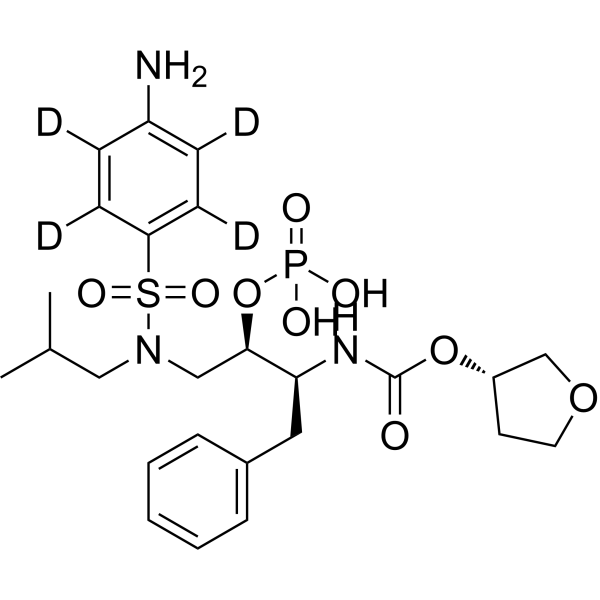 0 ImagesCat. No.: HY-78726SCAS No.: 1133702-41-6Synonyms: Amprenavir phosphate-d4; GW 433908-d4Fosamprenavir-d4 is the Deuterium-labeled Fosamprenavir (HY-78726). Fosamprenavir is an orally active inhibitor targeting HIV-1 protease and is a prodrug of Amprenavir (HY-17430). Fosamprenavir is hydrolyzed into Amprenavir (VX-478) by cell phosphatases in the intestinal epithelium. Amprenavir binds to the active site of HIV-1 protease, preventing the processing of viral gag and gag-pol polyprotein precursors, thereby inhibiting the formation of mature infectious virus particles and exerting anti-HIV-1 infection activity. Fosamprenavir can be used for the study of human immunodeficiency virus (HIV-1) infection.
-
RK-682 hemicalcium
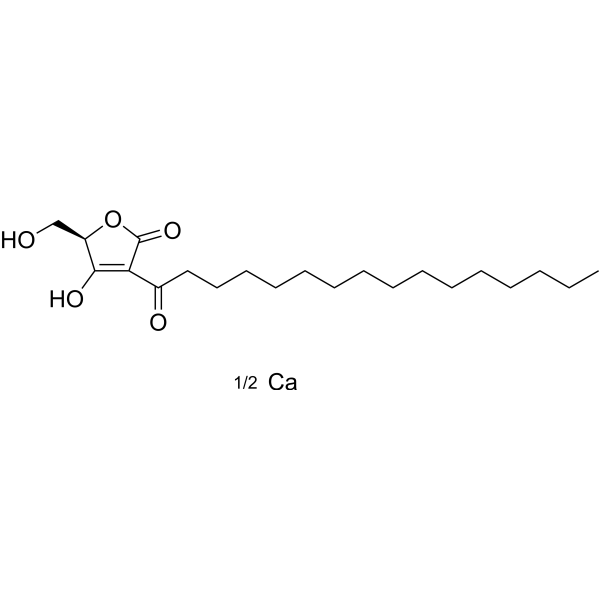 0 ImagesCat. No.: HY-135564CAS No.: 332131-32-5RK-682 hemicalcium is the hemicalcium salt form of RK-682 (HY-135564A). RK-682 hemicalcium is the inhibitor for protein tyrosine phosphatase (PTPase), heparanase, phospholipase A2 and HIV-1 protease. RK-682 hemicalcium inhibits the dephosphorylation of CD45 (IC50 is 54 μM) and VHR (IC50 is 2.0 μM), and thereby inhibits the ERK signaling pathway. RK-682 hemicalcium inhibits the cell viability of cancer cell MGH-U3, T24 and UROtsa with IC50s of 78.2, 43.2 and 145 nM, respectively, arrests the cell cycle at G1/S phase, inhibits the cell migration and autophagy in MGH-U3 and T24[2].
-
Pepstatin (Standard)
 0 ImagesCat. No.: HY-P0018RCAS No.: 26305-03-3Synonyms: Pepstatin A (Standard)Pepstatin (Standard) is the analytical standard of Pepstatin. This product is intended for research and analytical applications. Pepstatin (Pepstatin A) is a specific, orally active aspartic protease inhibitor produced by actinomycetes, with IC50s of 4.5 nM, 6.2 nM, 150 nM, 290 nM, 520 nM and 260 nM for hemoglobin-pepsin, hemoglobin-proctase, casein-pepsin, casein-proctase, casein-acid protease and hemoglobin-acid protease, respectively. Pepstatin also inhibits HIV protease[1][2].



